Tuesday, April 25, 2023

The Role of the Judiciary in Protecting Human Rights in Pakistan

April 25, 2023 0


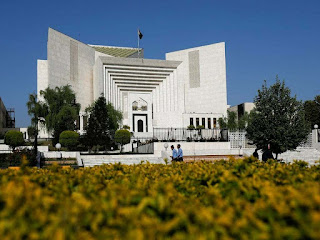
The role of the judiciary in protecting human rights in Pakistan is crucial. While human rights are universal and enshrined in Pakistan's constitution, their implementation has been challenging. The judiciary is responsible for upholding the constitution and protecting human rights, and its significance cannot be overstated.


The judiciary in Pakistan has a long history of protecting human rights, especially those of marginalized communities such as religious minorities, women, and children. The courts have issued landmark judgments that have established the rule of law and promoted human rights, including striking down laws that discriminate against women and religious minorities.


Moreover, the judiciary has been instrumental in safeguarding the rights of prisoners, ensuring they are not subjected to inhumane treatment or torture while in custody. The courts have also ensured that prisoners receive fair trials and that their rights are protected during the trial process.


The judiciary in Pakistan has also played an active role in protecting the right to freedom of speech and expression. The courts have struck down laws that limit the media's freedom to report on issues of public interest and upheld the right of citizens to protest peacefully.


Despite these achievements, there is still more work to be done to protect human rights in Pakistan. The judiciary should continue to play an active role in upholding the constitution and ensuring that human rights are protected for all citizens.

Friday, April 21, 2023

Stripping Away Suo Motu Powers: The Battle for Judiciary Independence in Pakistan

April 21, 2023 0


The National Assembly of Pakistan has passed a bill known as the Supreme Court (Practice and Procedure) Act 2023, which aims to curb the powers of the chief justice of Pakistan in taking suo motu notice. The bill proposes that a three-member committee consisting of senior judges will have the power to take suo motu notice instead of the chief justice alone. This committee will also ensure transparent proceedings in the apex court and give the right to appeal.


However, President Dr Arif Alvi has refused to give his assent to the bill twice, stating that the matter is sub judice before the apex court. The Supreme Court has also barred the government from implementing the bill, citing interference with and intrusion into the independence of the judiciary.


Suo motu notice refers to the power of the chief justice of Pakistan to take notice of a matter on their own accord, without the need for a formal complaint or petition. This power has been a subject of debate in Pakistan for several years, with some arguing that it gives too much power to the chief justice and can be misused.


The passage of this bill has been controversial, with some arguing that it is an attempt to curtail the independence of the judiciary and weaken the power of the chief justice. Others argue that it is a necessary step to ensure transparency and accountability in the apex court.


Overall, this is a significant development in the ongoing debate over the powers of the chief justice of Pakistan and the role of the judiciary in the country. It remains to be seen how this issue will be resolved, and what impact it will have on the future of Pakistan's judiciary.


Insights of Article


1. The National Assembly in Pakistan has converted the Supreme Court (Practice and Procedure) Bill 2023 into an act.

2. The President has refused to sign it into law, and the Supreme Court has ordered that it should not be implemented.

3. The bill aims to limit the suo motu powers of the Chief Justice of Pakistan.

4. The bill proposes to establish a three-member committee that will have the power to take suo motu notice, instead of the Chief Justice alone.

5. The Supreme Court has termed the bill as an interference in the independence of the judiciary.

6. The power of suo motu notice has been a crucial tool for the court to ensure that justice is served in cases where the fundamental rights of the citizens are violated.

7. The bill seeks to take away this power from the Chief Justice and give it to a committee, which many believe will compromise the independence and integrity of the judiciary.

8. The Supreme Court's objection to the bill aims to protect the independence of the judiciary and maintain its role as the ultimate arbiter of justice in the country.

9. The conversion of the bill into an act despite opposition from the President and the Supreme Court is a concerning development.

10. This highlights the need for a robust and independent judiciary to safeguard the rule of law and protect the fundamental rights of the citizens.


Thursday, April 20, 2023

"Supreme Court Orders Negotiations and Funding for Elections in Pakistan"

April 20, 2023 0


The Supreme Court of Pakistan recently considered a petition requesting for the national and provincial assemblies to hold general elections simultaneously. The court ordered the federal coalition and PTI to negotiate an agreement on the elections before 4pm on the same day. However, the proceedings did not resume as the three-judge bench did not appear in the courtroom. The coalition parties informed the court that they had planned to hold a dialogue with the opposition after Eid, but Justice Bandial instructed them to hold the talks immediately.


Representatives of the PPP and the Attorney General for Pakistan (AGP) Mansoor Usman Awan met with CJP Bandial in his chambers. Farooq H. Naek, who represented the PPP, told reporters that the CJP had been informed that the dialogue had been initiated with the PTI. The court adjourned until April 27, but a written order has not yet been issued. Meanwhile, JUI-F chief Maulana Fazlur Rehman rejected the idea of talks with PTI chairman Imran Khan.


In another order, the Supreme Court directed the government to provide funds to the Election Commission of Pakistan (ECP) to hold elections in Punjab and Khyber Pakhtunkhwa. However, the government refused to comply with the order, and the ECP, defence ministry, and finance ministry submitted their reports to the court in a sealed envelope. The court ordered the SBP to release funds worth Rs21bn for elections from Account No I, a component of the Federal Consolidated Fund worth Rs1.39 trillion, and send an “appropriate communication” to this effect to the finance ministry by April 17. The coalition government rejected its own demand for the provision of Rs21bn as a supplementary grant to the ECP for holding polls in the two provinces.


Insights of Article


1. The Supreme Court of Pakistan is involved in decisions related to national and provincial elections.

2. The court ordered the federal coalition and PTI to negotiate an agreement on the elections before a specific deadline, but the proceedings did not resume as expected.

3. The PPP and AGP met with CJP Bandial to inform him about the dialogue they initiated with PTI.

4. JUI-F chief Maulana Fazlur Rehman rejected the idea of talks with PTI chairman Imran Khan.

5. The Supreme Court directed the government to provide funds for the Election Commission of Pakistan to hold elections in Punjab and Khyber Pakhtunkhwa, but the government refused to comply with the order.

6. The SBP was ordered to release funds for elections from the Federal Consolidated Fund worth Rs1.39 trillion.

Saturday, April 15, 2023

General Knowledge MCQS

April 15, 2023 0


1.  Iran and Saudi Arabia on 10 March 2023 reached an agreement to restore diplomatic ties after

A. 4 years

B. 7 years

C. 10 years

D. 13 years


2. The “Iran-Saudi Peace Deal” was brokered by

(A) Pakistan

(B) China

(C) United States

(D) United Arab Emirates


3. The Silk Roads: A New History of The World” is written by___________?

A. XI JinPing

B. Joe Bidden

C. Peter Frankopan

D. David Ricardo


4. How many Countries Are the Members Of NATO?

A. 31

B. 29

C. 28

D. 27


5. International day for Mine Awareness is observed on?

A. 8th April

B. 15th May

C. 21st March

D. 4th April


6. "Pakistan Beyond the Crisis State" is written by?

A. Z.A Bhutto

b. Aitzaz Ahsan

C. Maleeha Lodhi

D. William Dalrymple


7. For which planet, it is said that the water is present in the form of ice?

A. Moon

B. Mercury

C. Venus

D. Mars


8.  On 6 February 2023, a deadly earthquake struck some parts of

A. Turkey

B. Lebanon

C. Ukraine

D. Turkey and Syria


9. Who wrote the book "Animal Farm"?

A. George Orwell

B. William Golding

C. Harper Lee

D. J.D. Salinger


10. Which planet is known as the Red Planet?

A. Venus

B. Mars

C. Jupiter

D. Saturn


11. Who discovered the theory of relativity?

A. Isaac Newton

B. Albert Einstein

C. Galileo Galilei

D. Stephen Hawking


12. The highest mountain peak in Africa is:

A. Kilimanjaro

B. Mount Everest

C. Mount McKinley

D. Mount Fuji


13. Who wrote the play "Romeo and Juliet"?

A. William Shakespeare

B. Oscar Wilde

C. Samuel Beckett

D. Tennessee Williams


14. The capital of Russia is:

A. Minsk

B. St. Petersburg

C. Kiev

D. Moscow


15. Who painted the Mona Lisa?

A. Vincent van Gogh

B. Michelangelo

C. Leonardo da Vinci

D. Pablo Picasso


16. The first President of the United States was:

A. George Washington

B. Thomas Jefferson

C. Abraham Lincoln

D. John F. Kennedy


17. The chemical formula for water is:

A. H2SO4

B. CO2

C. H2O

D. NaCl


18. Who is the author of "Pride and Prejudice"?

A. Bill Gates

B. Emily Bronte

C. Charlotte Bronte

D. Jane Austen


19. Who is known as the "Father of the Nation" in India?

A. Mahatma Gandhi

B. Jawaharlal Nehru

C. Sardar Vallabhbhai Patel

D. Bhagat Singh

Answer: A) Mahatma Gandhi


20. The largest planet in our solar system is:

A) Earth

B) Mars

C) Jupiter

D) Saturn                                                                                                      

Supreme Court Orders Rs21bn for Fair Elections in Punjab and Khyber Pakhtunkhwa

April 15, 2023 0


The Supreme Court of Pakistan has issued an order to the State Bank of Pakistan to allocate Rs21bn ($127m) for the purpose of conducting the general elections in Punjab and Khyber Pakhtunkhwa assemblies by 17th April. This directive was issued to ensure that the election process is carried out smoothly and without any hindrances. 


The court has also instructed the Election Commission of Pakistan to verify that the funds have been made available to it so that they can be used for the election process. This step is crucial in ensuring that the election process is carried out in a transparent and fair manner. 


Moreover, the State Bank and the Finance Ministry have been ordered to submit a compliance report by 23rd April, stating that they have followed the court's order and that the funds have been allocated to the Election Commission of Pakistan. 


>Overall, this directive from the Supreme Court of Pakistan is a positive step towards ensuring that the general elections in Punjab and Khyber Pakhtunkhwa take place without any issues and that they are conducted in a fair and transparent manner.


Insights of Article


1. The Supreme Court of Pakistan has issued an order to allocate funds for conducting general elections in Punjab and Khyber Pakhtunkhwa assemblies by 17th April.

2. The directive was issued to ensure that the election process is carried out smoothly and without any hindrances.

3. The Election Commission of Pakistan has been instructed to verify that the funds have been made available to it so that they can be used for the election process.

4. The step is crucial in ensuring that the election process is carried out in a transparent and fair manner.

5. The State Bank and the Finance Ministry have been ordered to submit a compliance report by 23rd April, stating that they have followed the court's order and that the funds have been allocated to the Election Commission of Pakistan.

6. This directive is a positive step towards ensuring that the general elections in Punjab and Khyber Pakhtunkhwa take place without any issues and that they are conducted in a fair and transparent manner.


Friday, April 14, 2023

Islamiyat G.K (Battles of Islam)

April 14, 2023 0

Battles of Islam (Part 2)


1. During Ghazwa Bani Nuzair wine was prohibited.

2. The battle of Khandaq is also known as battle of Ahzab.

3. Conquest of Makkah was took place on 20 Ramzan.

4. Battle in which prophet not participated is known as Saria.

5. Hazrat Hamza was the first commander of Islamic Army.

6. In Uhd battle Muslim women participated firstly.

7. Battle of Mauta was the first non-Arab War.

8. 3000 was the number of Muslims at the battle of Ditch.

9. Last Ghazwa- Tabuk.

10. First Islamic Non-Arab was battle of Mautta 8. A.H.

11. In Battle of Uhad, the teeth of Holy Prophet were martyred.

12. Abu Jahal was killed in Battle of Badr by Maaz (add)

13. In Hudabiya Sohail bin Amru represented Quraysh.

14. Battle of Hunain fought b/w Muslims and Hawazin Tribe.

15. Batttle of Tabuk was against the Roman Emperor Heraclius.

16. The first Shaheed (Martyr) was Amaar bin Yaasir

17. First female martyr: Summaya (mother of Amaar bin Yaasir)

18. The first person to be martyred in the Battle of Badr was the freed slave of Hazrat Umar : Muhaj’jah

19. Battle of chains was fought b/w Persians and the Muslims.

10. Umar bin Abdual Aziz is considered as the 5th Khalifa.

11. Abdul Malik was the poet ruler of Ummaya.

12. Karballa took place on 10th Muharram 61 A.H/ 680 A.D

13. Hazrat Khalid bin Walid accepted Islam in 8th A.H.

14. During the caliphate of Umar (RA) Iran was conquered.

15. Battle of Yermuk was fought in 634 A.D.:

16. Khyber conquest made in 7th Hijra (628 A.D)

17. The Ghazwa in which the Holy Prophet (PBUH) missed four prayers was Ghazwa Khandaq.

18. First woman martyr Samiya by Abu Jahl.

19. First man martyr Haris bin Abi Hala.

20. Jihad means to strive hard.

21. Jihad made obligatory in 2nd A.H.

22. The battle was forbidden in Arabs in the month of Muharam.

23. Ghazwa-e-Tabook was fought in 9 A.H.

Islamiyat G.K (Battles of Islam)

April 14, 2023 0


Battles of Islam (Part 1)


1. First Ghazwa is Widdan or Abwa in 1 A.


2. 624 Battle of Badr. 2hij


3. 625 Battle of Uhad. 3hij


4. 626 Battle of Rajih. 4hij


5. 627 Battle of Khandaq (Ahzab) 5hij.


6. 628, Treaty of Hudaibiya, Hazrat Khalid bin Walid Accepted Islam, Conquest of Khyber.6hij


7. 629, Battle of Mutah, Preaching of Islam to various kings.7hij


8. 630, Battle of Hunain, Conquest of Makkah.8hij


9. 631, Battle of Tabuk. 9hij


10. 632, Hajjat-ul-Wida.10hij


11. 680, Tragedy of Karballah.61hij


12. Badr is a village.


13. Battle of Bard was fought on 17th Ramzan.


14. Battle of Uhd was fought on 5th Shawal.


15. Battle Badar Ghazwa is named as Furqan.


16. Uhd is a hill.


17. Yom-ul Furaqn is called to Yom ul Badar.


18. Fath Mobeen is called to Sulah Hudaibiah.


19. Number of soldiers in Badar, Muslim 313 Kufar 1000


20.After Badr conquest, Prophet stayed for 3 days there.


21. Badr was fought for 3 times.


22. Martyr of Badr Muslims 14 Kufar 70


23. Leader of the Kufar in this battle was Abu Jahl.


24. Number of Muslim martyrs in the battle of Uhad 70


25. In Uhad quraish were laid by Abu Sufwan.


26. In Uhad number of Muslim soldiers 1000 kufar 3000.


27. Ahzab means Allies.


28. Ditch dug on border of Syria with help of 3000 companions in 2 weeks.


29. Muslim strength 1600.


30. Khyber was captured in 20 days.

Offer and its Essential Elements

April 14, 2023 0

Offer/Proposal [Section 2 (a)] 

An offer is the starting point in the making of an agreement. An offer is also called 'proposal'. 

According to Section 2(a) of The Contract Act, 1872, ‘When one person signifies to another, his willingness to do or abstain from doing anything with a view to obtaining the assent of the other, to such an act or abstinence, he is said to make a proposal’.


Offer is a crucial element that forms the basis of any contract. It is a proposal made by one party to another, indicating a willingness to enter into an agreement on certain terms and conditions. The terms of the offer must be definite and certain, leaving no room for ambiguity or confusion. This ensures that the parties involved understand the nature of the agreement they are entering into.

For an offer to be valid, it must indicate the intention of the offeror to be bound by the terms of the offer in case of acceptance by the offeree. This means that the offeror must be willing to enter into a legally binding agreement, and the offeree must be able to accept the offer on the terms presented.

An offer can be made in several ways, including in writing, orally, or by conduct. The mode of communication of the offer is not material as long as it is clear and unambiguous. The offer can be addressed to a particular person, a group of persons, or the public at large.

However, it's essential to note that an invitation to offer or a mere expression of willingness to negotiate or discuss the terms of an agreement is not an offer under the Contract Act. For instance, a price list displayed in a shop window is not an offer but an invitation to offer. The customer makes the offer to buy, and the shopkeeper accepts the offer by providing the goods or services on the terms stated in the price list.

Essential Elements of an Offer

1. There must be two parties:

It must be made by one person to another person. For a valid offer, there must be two parties. In other words, there can be no proposal by a person to himself.

Example: X says to Y that he wants to sell his car to himself for 1 lakh. There is no proposal because there can be no proposal by a person to himself.

2. Willingness:

It must be an expression of willingness to do (i.e. a positive act) or to abstain from doing something (i.e. a negative act).

Example: X offers to sell his car to Y for 1 lakh. It is a positive act on the part of X.

Example: X offers not to file a suit against Y if Y pays X the outstanding amount of Rs. 1,00,000. It is a negative act on the part of X.

3. Communication of offer: 

The offer must be communicated to the offeree, either directly or indirectly, through conduct or other means.

4. Intention to create legal relations: 

The offer must indicate the intention of the offeror to enter into a legally binding agreement with the offeree.

5. Definite and certain terms: 

The terms of the offer must be clear, specific, and unambiguous, leaving no room for confusion or misunderstandings.

6. Capacity to contract: 

The parties involved in the offer must have the legal capacity to enter into a contract, which means they must be of sound mind, of legal age, and not disqualified by law.

UAE Offers $1 Billion in Financial Support to Pakistan Amid IMF Deadlock

April 14, 2023 0


The United Arab Emirates (UAE) has pledged to offer financial support worth $1 billion to Pakistan, as announced by the country's finance minister, Ishaq Dar. This announcement comes after a visit by a delegation from the International Monetary Fund (IMF) in January of this year, which failed to resolve a deadlock over fiscal policy adjustments. However, experts have raised doubts over the effectiveness of such promises, as similar pledges have been made in the past without being fully realized.


The IMF has set forth a list of conditions that must be met for any loan package to be approved, including the removal of subsidies, increasing taxes, and eliminating an artificial cap on the value of the Pakistani rupee. Pakistan had previously entered into a $6 billion IMF programme in 2019, which was subsequently increased to $6.5 billion last year. 


It remains to be seen whether the $1 billion in financial support from the UAE will be enough to meet the IMF's conditions and resolve the ongoing fiscal policy deadlock in Pakistan. Nevertheless, this news is likely to be welcomed by the Pakistani government, which has been struggling to secure international support amidst a challenging economic climate.


Insights of Article 


1. The United Arab Emirates (UAE) has pledged $1 billion in financial support to Pakistan.

2. The announcement came after a failed attempt to resolve fiscal policy adjustments by a delegation from the International Monetary Fund (IMF) in January.

3. Experts doubt the effectiveness of such promises as similar pledges have been made in the past without being fully realized.

4. The IMF has set forth a list of conditions that must be met for any loan package to be approved, including the removal of subsidies, increasing taxes, and eliminating an artificial cap on the value of the Pakistani rupee.

5. Pakistan had previously entered into a $6 billion IMF programme in 2019, which was subsequently increased to $6.5 billion last year.

6. It remains to be seen whether the $1 billion in financial support from the UAE will be enough to meet the IMF's conditions and resolve the ongoing fiscal policy deadlock in Pakistan.

7. The news is likely to be welcomed by the Pakistani government, which has been struggling to secure international support amidst a challenging economic climate.

Wednesday, April 12, 2023

Supreme Court of Pakistan Takes Action Against Officials Over Delay in Election Funds Disbursement.

April 12, 2023 0


The Supreme Court of Pakistan has taken action against the government officials responsible for failing to disburse Rs21bn in funds for elections in Punjab and Khyber Pakhtunkhwa. The officials who have been issued notices include those from the finance ministry, State Bank of Pakistan, the Attorney General for Pakistan and the Election Commission of Pakistan. 


This action by the Supreme Court follows a report by the Election Commission which revealed that the government had shown reluctance in releasing the funds required for the election. It is believed that the government is delaying the polls, and Finance Minister Ishaq Dar has tabled a bill in the National Assembly and Senate seeking the release of funds for holding elections in both provinces. 


This delay in the election process has raised concerns over the government's commitment to ensuring free and fair elections. The Supreme Court's intervention is a positive step towards ensuring that the election process is conducted in a transparent manner and that all necessary funds are released timely to ensure that the election process is not compromised. 


Insights of this Article


1. The Supreme Court of Pakistan is taking action against officials responsible for failing to disburse election funds, which suggests a lack of accountability and transparency in the election process.

2. The delay in the election process may raise concerns about the government's commitment to ensuring free and fair elections.

3. The Finance Minister has tabled a bill in the National Assembly and Senate seeking the release of funds for both provinces, which suggests that the government may have been reluctant to release funds for the election.


Pakistan General Knowledge Mcqs

April 12, 2023 0

MCQS With Answers

1. How many constitutions have been enforced in Pakistan?

A. 2

B. 3

C. 4

D. 5

2. What form of government system is adopted in Pakistan?

A. Presidential

B. Parliamentary

C. Monarchy

D. None of these

3.  If population of Gilgit and Azad Kashmir is also taken in account then by population Pakistan is world’s ________ largest country.

A.  fourth

B. fifth

C. sixth

D. seventh

4. At the time of Independence which community was in majority in the state of Kashmir?

A. Muslim

B. Hindu

C. Sikh

D. Christian

5. The “Indus Waters Treaty” between Pakistan and India was signed on 19 September.


A. 1956

B. 1962

C. 1960

D. 1976

6. According to the population, Pakistan is ________ largest country in the world.


A. fourth

B. fifth

C. sixth

D. seventh

7. Pakistan is located in the


A. East Asia

B. West Asia

C. South Asia

D. Central Asia

8. The only country with which Pakistan shares a maritime border (and not the land border) is


A. Iran

B. India

C. UAE

D. Oman

9. Which was the first country to recognize Pakistan?


A. India

B. China

C. Iran

D. NOT

10. Pakistan opened its first embassy in?


A. Iran

B. India

C. UAE

D. NOT

11.Which country was first to open its embassy in Pakistan?


A. Iran

B. China

C. India

D. Egypt

E. NOT

12. In Urdu, the name “Pakistan” literally means?


A. Pure land

B. Truthful land

C. Land of the pure

D. All of the above

13. Indian forces occupied Kashmir in


A. 1947

B. 1948

C. 1956

D. 1963

14. In which year the Kashmiris started their freedom movement against Dogra rule before the partition of the sub-continent?


A. 1945

B. 1940

C. 1933

D. 1930

15. Quaid-e-Azam joined the All-India Muslim League in


A. 1907

B. 1909

C. 1911

D. 1913


Tuesday, April 11, 2023

ECP Takes a Stand for Fair and Transparent Elections in Punjab: Proposes Changes to Election Law Amidst Funding Controversy

April 11, 2023 0


The Election Commission of Pakistan (ECP) has recently submitted a report to the Supreme Court regarding the issue of the government funding the upcoming elections in Punjab. The government has not yet provided the necessary funds for the elections, and instead, has referred the matter to Parliament for further discussion and decision-making.


In light of this situation, the ECP has proposed some changes to the election law to prevent any judicial interference and ensure that the elections are conducted fairly and transparently. This move by the ECP is significant, as it aims to promote integrity and impartiality in the election process, which is essential for any democracy to function effectively.


Meanwhile, the Finance Minister, Ishaq Dar, has tabled a bill that seeks the release of funds for the elections. The funds will be charged to the Federal Consolidated Fund, which is a central pool of money that is used to finance various government projects and initiatives.


Overall, this situation highlights the importance of ensuring that elections are conducted fairly and transparently, and that adequate funds are provided to facilitate the process. The proposed changes to the election law and the efforts to secure funding for the elections are positive steps towards achieving this goal, and it is hoped that the government and other stakeholders will work together to ensure that the upcoming elections in Punjab are conducted in a free and fair manner.


Insights 
1. The government has not yet provided necessary funds for the upcoming elections in Punjab.
2. The ECP has proposed changes to the election law to promote integrity and impartiality in the election process.
3. The Finance Minister has tabled a bill seeking the release of funds for the elections.
4. The situation highlights the importance of conducting elections fairly and transparently and providing adequate funds for the process.
5. The proposed changes to the election law and efforts to secure funding are positive steps towards achieving free and fair elections.
x

Controversy Surrounds Justice Qazi Faez Isa's Attendance at National Constitution Convention in Pakistan

April 11, 2023 0


Justice Qazi Faez Isa, who is the senior most judge of Pakistan's Supreme Court, recently attended the National Constitution Convention to commemorate the 50th anniversary of the 1973 Constitution. However, his attendance has sparked controversy due to the current political turmoil in the country, and the fact that no other top court judges were present at the event.


Critics argue that Justice Isa should not have attended the ceremony where he sat among lawmakers whose cases he once heard in his courtroom. They claim that his presence undermines the impartiality and independence of the judiciary, and raises questions about his own ethical conduct. However, Justice Isa has defended his decision to attend the convention, saying that he did so to support the Constitution and to emphasize the importance of teaching it in schools.


The 1973 Constitution of Pakistan is a landmark document that has been instrumental in shaping the country's political and legal landscape. It lays down the fundamental rights and principles of governance, and provides a framework for the functioning of the state. The Constitution has been amended several times over the years, and there have been debates about its efficacy and relevance in the contemporary context.


Justice Isa's attendance at the National Constitution Convention can be seen as a statement of support for the Constitution and its values. By participating in the event, he has not only demonstrated his commitment to the rule of law but also his belief in the importance of civic education and awareness. His message is clear: the Constitution is a living document that needs to be understood and appreciated by all citizens, regardless of their political affiliations.


In conclusion, Justice Qazi Faez Isa's attendance at the National Constitution Convention has sparked controversy but also highlighted the significance of the Constitution in Pakistan's political and legal discourse. His presence at the event underscores the need for judicial independence, ethical conduct, and civic education, and serves as a reminder that the Constitution is the bedrock of the nation's democratic aspirations.

Monday, April 10, 2023

Contract Act and Its Various Types

April 10, 2023 0

What is Contract?

1) In the words of Pollock, ‘every agreement and promises enforceable by law is contract’.

2) According to Sir William Anson, a contract is “a legally binding agreement between two or more persons by which rights are acquired by one or more to acts or forbearances on the part of the others.”

3) According to Salmond, “A contract is an agreement creating and defining oblgations between the parties.

4) According to Section 2(h) of the Contract Act, 1872, "An agreement enforceable by law is a contract."

Thus to make a contract, there must be:

a) An agreement, and

b) That agreement must be enforceable by law.

Contract = Agreement + Enforceability

What is Agreement?

An agreement becomes a contract when it is enforceable at law.

According to Section 2(e) of the Contract Act, 1872, "Every promise and every set of promises forming the consideration for each other is an agreement.”

What is promise?

According to Section 2(b) of the Contract Act, 1872, "A proposal when accepted, becomes a promise.”

Example: X offers to sell his car for ` 1,00,000 to Y. Y accepts this offer. This offer after acceptance becomes promise and this promise is treated as an agreement between X and Y.

In other words, an agreement consists of an offer by one party and its acceptance by the other.

Agreement = Proposal or Offer + Acceptance

What is Enforceability of an agreement?

It means an agreement which creates some legal obligation; if this agreement is not followed by any party to contract, he can be sued.

Example: X offers to sell his car to Y for Rs. 1,00,000. Y accepts this offer. Such an agreement between X and Y is a contract because it creates legal obligation. In this agreement, if X refuses to sell or Y refuses to buy, the other party can file a suit in the court of law for the breach of the contract.

What are the different types of Contract?

On the basis of Mode of Formation:

1. Express Contract:

A contract would be an express contract if the terms are expressed by words or in writing.
Section 9 of the Act provides that if a proposal or acceptance of any promise is made in words the promise is said to be express.

Example: X says to Y "Will you buy my car for Rs. 1,00,000?" Y says to X "I am ready to buy your car for Rs. 1,00,000." It is an express contract made orally.
Example: X writes a letter to Y, "I offer to sell my car for Rs. 1,00,000 to you." Y sends a letter to X, "I am ready to buy your car for Rs. 1,00,000." It is an express contract made in writing.

2. Implied Contract:

An implied contract is a contract which is made otherwise than by the words spoken or written. It came into existence on account of an act or conduct of the parties.

Section 9 of the Act contemplates such implied contracts when it lays down that in so far as such proposal or acceptance is made otherwise than in words, the promise is said to be implied.

Example: A stops a taxi by waving his hand and boards it. There is an implied contract that A will pay the prescribed fare on reaching his destination.

3. Quasi Contract:

Quasi Contracts are contracts which are created neither by word spoken, nor written, nor by the conduct of the parties. But these are created by the law.

Example: If Mr. A leaves his goods at Mr. B’s shop by mistake, then it is for Mr. B to return the goods or to compensate the price. In fact, these contracts depend on the principle that nobody will be allowed to become rich at the expenses of the other.

On the basis of Mode of Performance:

1. Executed Contract:

It is a contract in which both the parties to the contract have performed their respective obligations under the contract.

Example: X offers to sell his car to Y for Rs. 1,00,000. Y accepts X's offer. X delivers the car to Y and Y pays Rs. 1,00,000 to X. It is an executed contract.

2. Executory Contract:

It is a contract in which both the parties to the contract have still to perform their respective obligations.

Example: X offers to sell his car to Y for Rs. 1,00,000. Y accepts X's offer. If the car has not yet been delivered by X and the price has not yet been paid by Y, it is an executory contract.

3. Partly Executed and Partly Executory Contract:

In a partly executed and partly executory contract, one party has already performed his promise and the other party has yet to execute his promise.

Example: A sells his car to B and A has delivered the car but B is yet to pay the price. For A, it is executed contract whereas it is executory contract on the part of B since the price is yet to be paid.

4. Unilateral Contract:

A unilateral contract is also known as a one-sided contract. It is a contract where only one party has to perform his promise.

5. Bilateral Contract:

In a bilateral contract both the parties have to perform their respective promises. It is also known as a two-sided contract.

On the basis of Enforceability or Validity:

1. Valid Contract:

A contract which satisfies all the conditions prescribed by law is a valid contract.

Example: X offers to marry Y. Y accepts X's offer. This is a valid contract.

2. Void Contract:

According to Section 2(j) of the Contract Act, 1872, "A contract which ceases to be enforceable by law becomes void when it ceases to be enforceable." In other words, a void contract is a contract which was valid when entered into but which subsequently became void due to impossibility of performance, change of law or some other reason.

Example: X offers to marry Y. Y accepts X's offer. Later on Y dies. This contract was valid at the time of its formation but became void on the death of Y.

3. Void Agreement:

According to Section 2(g), "An agreement not enforceable by law is said to be void." Such agreements are void-ab-initio (which means that they are unenforceable right from the time they are made) and does not create any legal rights or obligations.

Example: An agreement with a minor or a person of unsound mind.

4. Voidable Contract:

According to Section 2(i) of the Indian Contract Act, 1872, "an agreement which is enforceable by law at the option of one or more of the parties thereon but not at the option of the other or others", is a voidable contract. It happens when consent of a party to a contract is not free. The party whose consent is not free in contract may rescind the contract within reasonable time. If he does not choose to do so, the contract will be valid and binding. The right to rescind the contract is only given to the aggrieved party whose consent is not free but not to the other party.

Example: X threatens to kill Y if he does not sell his house for Rs. 1,00,000 to X. Y sells his house to X and receives payment. Here, Y's consent has been obtained by coercion and hence this contract is voidable at the option of Y, the aggrieved party. If Y decides to avoid the contract, he will have to return Rs. 1,00,000 which he had received from X. If Y does not exercise his option to repudiate the contract within a reasonable time and in the meantime, Z purchases that house from X for Rs. 1,00,000 in good faith, Y cannot repudiate the contract.

5. Illegal Agreement:

An illegal agreement is one which is prohibited by law or is against public policy or is immoral. In other words, an illegal agreement is one the object of which is unlawful. Such an agreement cannot be enforced by law. Thus, illegal agreements are always void ab-initio (i.e. void from the very beginning).

Example: X agrees to pay Y Rs. 1,00,000 if Y kills Z. Y kills Z and claims ` 1,00,000. Y cannot recover from X because the agreement between X and Y is illegal as its object is unlawful.

6. Unenforceable Contracts:

It is a contract which is actually valid but cannot be enforced because of some technical defect (such as not in writing, under stamped). Such contracts can be enforced if the technical defect involved is removed.


The Struggle for a Stable Constitution: The Constitutional Situation in Pakistan During Zulfikar Ali Bhutto's Leadership

April 10, 2023 0

The article provides a detailed account of the constitutional situation in Pakistan during the time of Zulfikar Ali Bhutto's leadership. It highlights the fact that Pakistan had been struggling to establish a stable and durable constitution since its inception in 1947. The country had gone through several constitutions, including the 1956 and 1962 constitutions, but none of them had been able to provide a framework for a democratic and inclusive political system.


Bhutto's constitutional team faced significant challenges in the process of constitution-making. The team had to find a way to reconcile the differing political ideologies and interests of the various political parties and groups in the country. The article describes the negotiations between the government and opposition parties to reach an accord on the interim and permanent constitutions. The team had to navigate complex political terrain and overcome various obstacles, including opposition from conservative religious groups.


The article highlights the key individuals who played a critical role in the constitution-making process. Mahmood Ali Kasuri and Abdul Hafeez Pirzada are two such individuals who are mentioned in the article. They were instrumental in drafting the constitution and securing consensus among the various political groups.


The article concludes by stressing the importance of the constitution as a binding force for the people of Pakistan. The constitution provides a framework for creating a democratic and inclusive political system that can meet the needs of all citizens. The article warns against any attempts to tinker with the constitution without a unanimous consensus, as this could undermine the stability and integrity of the country. Overall, the article provides a comprehensive and insightful account of the challenges and successes of the constitution-making process in Pakistan.


Key Points

  1. Pakistan has struggled to establish a stable and durable constitution since its inception in 1947.
  2. The country had gone through several constitutions, but none had been able to provide a framework for a democratic and inclusive political system.
  3. Bhutto's constitutional team faced significant challenges in the process of constitution-making, including reconciling differing political ideologies and interests of various political parties and groups in the country.
  4. Negotiations between the government and opposition parties were necessary to reach an accord on the interim and permanent constitutions.
  5. The team had to navigate complex political terrain and overcome various obstacles, including opposition from conservative religious groups.
  6. Mahmood Ali Kasuri and Abdul Hafeez Pirzada played critical roles in drafting the constitution and securing consensus among the various political groups.
  7. The constitution is a binding force for the people of Pakistan that provides a framework for creating a democratic and inclusive political system that can meet the needs of all citizens.
  8. Any attempts to tinker with the constitution without a unanimous consensus could undermine the stability and integrity of the country.

Sunday, April 9, 2023

Prime Minister Shehbaz Sharif Convenes Emergency Cabinet Meeting to Address Ongoing Political and Judicial Crisis in Pakistan

April 09, 2023 0


Prime Minister Shehbaz Sharif has called a meeting of the federal cabinet to discuss several issues, including the ongoing political, economic, and constitutional crises in the country. The meeting is being held amid a face-off with the judiciary over the Punjab polls case.


One of the topics to be discussed at the meeting is the proposed amendments to the contempt law. The cabinet is expected to discuss making it mandatory to table reports against judges submitted in the Supreme Judicial Council before parliament.


The meeting will be held at 2 pm, and the premier will chair it via video link from Lahore. Additionally, the sources said that the PM would take the cabinet into confidence on the decisions taken in the meeting of the National Security Committee (NSC).


The National Assembly will also commemorate the Golden Jubilee of the Constitution on Monday.


Overall, the meeting of the federal cabinet is an important step towards addressing the various challenges faced by the country. It provides an opportunity for the government to take stock of the situation and chart a course of action for the future.


Insights of the Meeting


1. There are ongoing political, economic, and constitutional crises in the country.

2. The Prime Minister, Shehbaz Sharif, has called a meeting of the federal cabinet to discuss these crises.

3. There is a face-off with the judiciary over the Punjab polls case.

4. The meeting will also discuss amendments to the contempt law and making it mandatory to table reports against judges submitted in the Supreme Judicial Council before parliament.

5. The cabinet meeting will be held at 2pm and the premier will chair it via video link from Lahore.

6. The PM will take the cabinet into confidence on the decisions taken in the meeting of the National Security Committee (NSC).

7. The National Assembly will commemorate the Golden Jubilee of the Constitution on Monday.

Saturday, April 8, 2023

Nature of Contract Act

April 08, 2023 0

Nature of Law of Contract

Law of contract is the branch of law which determines the circumstances in which promises made by the parties to a contract are legally binding on them. Its rules define the remedies available in a court of law against a person who fails to perform his contract, and the conditions under which the remedies are available.

The law of contract is contained in the Contract Act, 1872 which

a) deals with the general principles of law governing all contracts, and

b) covers the special provisions relating to special contracts like Bailment, Pledge, Indemnity, Guarantee and Agency.

For Example;

1. When you purchase a newspaper, you enter into a contract with the vendor of newspaper.

2. When you purchase milk, you enter into a contract with the milkman.

3. When you purchase bread and butter, you enter into a contract with the vendor of bread and butter.


Law of Contract is not the whole Law of Agreements nor the whole law of obligations:

The law of contracts is the law of only those agreements which create legal obligations (i.e. an obligation which is enforceable by law), it is not the law of those agreements which do not create legal obligations.

An obligation is the duty to do or not to do certain act. In other words, the law of contract is concerned with only those agreements where the parties have the intention to create legal obligations (i.e. the parties are bound to do or not to do certain act). In business or commercial agreements, the usual presumption is that the parties intend to create legal obligations. However, in social, domestic, moral or religious agreements, the usual presumption is that the parties do not intend to create legal obligations.

Salmond has observed that the law of contract is “not the whole law of agreements, nor is it the whole law of obligations. It is the law of those agreements which create obligations and those obligations which have their sources in agreements.” It excludes all obligations which are not contractual in nature and agreements which are social in nature.

Example: X offers to sell his car to Y for ` 1,00,000. Y accepts this offer. In this agreement if there is default by either party, an action for breach of contract can be enforced through a court of law provided all the essential elements of a valid contract are present in this agreement.

Example: X invites Y to dinner. Y accepts the invitation but fails to turn up. Here, X cannot sue Y for damages because the parties to this agreement do not intend to create legal obligations.


Friday, April 7, 2023

What is Contract Act?

April 07, 2023 0

The Contract Act

The Contract Act is a fundamental piece of legislation that governs the formation, enforcement, and breach of contracts in Pakistan. Enacted in 1872, the Act has been amended several times to keep up with the changing times and business practices.

document.write('');

The Contract Act defines a contract as an agreement between two or more parties that creates an obligation to do or not to do something. The parties to the contract must have a lawful object and must have the capacity to contract. The Act also defines various types of contracts, such as contracts of sale, lease, partnership, and employment, among others.


The Act lays down the essential elements of a contract, such as offer, acceptance, consideration, and intention to create legal relations. An offer is a proposal made by one party to another, while acceptance is the assent given by the other party to the offer. Consideration is the price or benefit that each party receives from the contract, and it is usually expressed in monetary terms. Intention to create legal relations means that both parties intend to be legally bound by the contract.

The Act also lays down the rules for the performance of contracts. The parties must perform their obligations under the contract in good faith, and any breach of the contract may give rise to a claim for damages. In case of a breach, the innocent party may either seek specific performance of the contract or claim damages for the loss suffered.


The Act also provides for various modes of discharge of a contract, such as by performance, agreement, breach, or impossibility of performance. A contract may also be discharged by frustration, which occurs when an unforeseen event makes it impossible to perform the contract.


The Contract Act also provides for certain special types of contracts, such as contracts of indemnity and guarantee. A contract of indemnity is a contract in which one party agrees to compensate the other for any loss or damage suffered by the latter due to the former's actions. A contract of guarantee is a contract in which one party agrees to be responsible for the debt or obligation of another party.


The Act also lays down the rules for the assignment and delegation of rights and liabilities under a contract. The parties may assign their rights or delegate their obligations to a third party, subject to certain conditions.


In conclusion, the Contract Act is a comprehensive piece of legislation that governs the formation, performance, and discharge of contracts in India. It provides a framework for the parties to enter into binding agreements, and it also provides remedies in case of breach or non-performance of the contract. The Act has stood the test of time and remains relevant in today's business environment.